
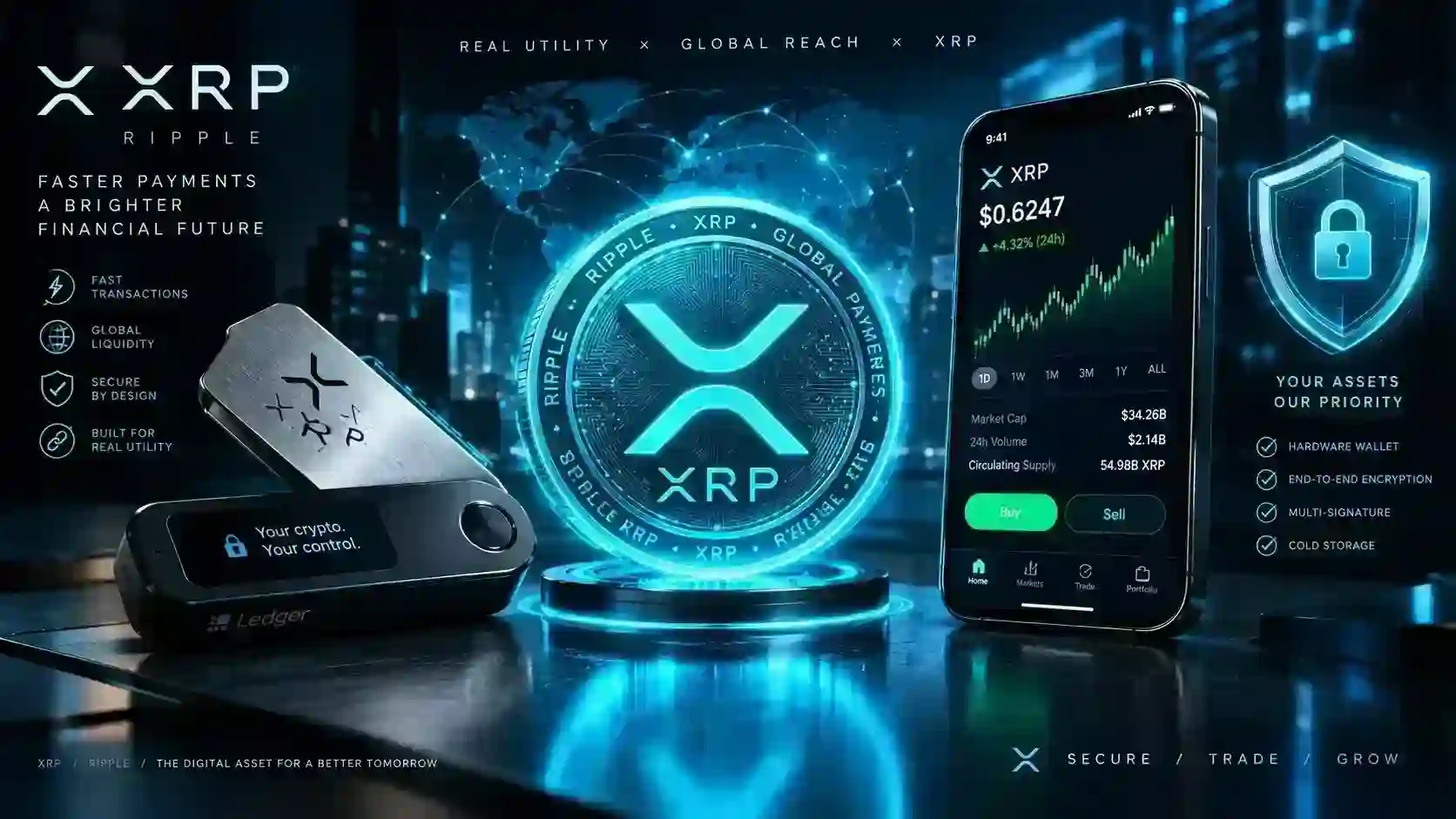
Binance.US vs. Cold Storage: Key security differences for holding XRP.
When deciding between Binance.US vs cold storage XRP, the choice comes down to trading convenience versus absolute key ownership.
Holding XRP stateside means picking your priority: instant market execution on an exchange, or total asset protection in cold storage.
Keeping your coins on an exchange allows for fast execution, but Binance.US controls the private keys.
Shifting your XRP to a hardware wallet, on the other hand, pulls your assets off the internet entirely and puts you in the driver’s seat.
The speed and simplicity of Binance.US are hard to beat for active trading, yet keeping your funds on-site leaves them under the exchange’s thumb.
A hardware transfer wipes out counterparty exposure and leaves you as the sole owner of your XRP on-chain.
Where you park your XRP ultimately hinges on your game plan:
quick market access for day-to-day trades, or bulletproof offline security for the long haul.
What is XRP?
Ripple is a payment network platform powered by XRP. Think of XRP as the fuel of the system—it links different currencies so payments go through in seconds without eating up your money in high fees.
Binance.US vs. Cold Storage: Quick Comparison
| Feature / Aspect | Binance.US (Custodial Hot Wallet) | Cold Storage (Hardware Wallet) | |
| Credential & API Security | High user burden. Places the responsibility on you to keep passwords, 2FA, and API keys safe from hackers. | Hardware-isolated. Keys never touch the internet; no API keys or third-party connections required for basic storage. | |
| Third-Party Risk | Elevated. You are completely dependent on the exchange staying solvent, avoiding regulatory crackdowns, keeping databases leak-free, and honoring withdrawal requests. | Zero middleman risk. Cold storage ensures web-based vulnerabilities, bad API connections, and platform shutdowns never reach your tokens. | |
| Key Ownership & Control | Held directly by the platform (BAM Trading Services Inc.). You manage login credentials, not the underlying private keys. | 100% owned and controlled by you offline. You control the offline recovery seed phrase and private keys. | |
| Control Over Assets | Custodial access. Moving crypto is subject to platform rules, system downtime, maintenance windows, and sudden account holds. | Sovereign control. You sign transfers directly on-chain with zero middleman approval needed. | |
| Best Use Case | Short-term Active Traders | Long-term HODLers |
Key Risks of Storing XRP on Binance.US
Custody and Security Risks:
- Centralized Private Key Storage: Because Binance.US holds your private keys on its own network, your funds stay in the line of fire if the platform ever runs into cyberattacks or server bugs.
- No True Ownership: Keeping your crypto on an exchange isn’t real self-custody. All it takes is one surprise collapse or cash crunch for the platform to freeze your wallet permanently. US Regulatory Uncertainty:
- Mounting Legal Pressure: US crypto platforms deal with an ever-changing wall of regulations. One move from state or federal agencies can put a freeze on trading or force exchanges to drop tokens with zero warning.
- Primary Triggers for Account Freezes: Suspicious or flagged transaction activity Identity verification (KYC) mismatches or re-verification demands Unpaid taxes or tax liens Formal court orders or law enforcement mandates SIM Swap and Credential Attacks:
- SIM Hijacking Risks: Bad actors harvest your personal data to fraudulently switch your cell service to a burner SIM they control.
- 2FA Bypass: SMS-based one-time passwords (OTPs) redirect to the attacker, granting them access to compromise your exchange account.
Why Is Cold Storage the Safest Option for XRP?
Long-term XRP holders get the best protection by moving their tokens into cold storage:Fully Cut Off from Online Threats:
- Offline Key Storage: Your private keys stay locked away inside an advanced security chip (EAL6+ grade). Since it stays completely off the web, hackers have zero backdoor into your wallet.
- Zero Exposure to Online Scams: With no direct link to the web, remote hackers, fake phishing links, and data-stealing malware cannot touch your funds. Absolute Ownership and Full Custodial Control:
- Eliminates Counterparty Risk: You no longer depend on an exchange’s financial health.
- True Control: A cold wallet puts the actual ownership of your XRP in your hands, not an exchange’s. Lost or Broken Device? Don’t Stress Breaking or losing your hardware device won’t wipe out your crypto. The gadget just holds your access keys; your actual XRP stays securely on the ledger. You can easily restore your full balance on a replacement device with your standard 12- or 24-word recovery phrase.
Things to Check Before Sending XRP to Cold Storage
- Account Reserve: Every new address holds back a tiny amount of XRP as an anti-spam safeguard built into the network.
- 1 XRP Activation: Every new XRP address requires a minimum deposit of 1 XRP to come alive on the blockchain. This balance stays locked to keep the account open.
- Closing the Wallet: If you delete the account down the road, an AccountDelete command burns a 0.2 XRP fee and returns the remaining 0.8 XRP to your destination wallet.
- Dirt-Cheap Network Fees: You pay next to nothing to move funds—standard fees sit around 0.00001 XRP.
- Destination Tag Rules: Deposits to Exchanges: The wallet address gets your XRP to the building; your Destination Tag directs it to your front door. Always paste your tag to avoid losing your deposit. Exchanges route pooled deposits using this number, and leaving it blank will delay or lose your funds. Transfers to Hardware Wallets: You never need a Destination Tag when sending XRP to your own cold wallet because you are the sole owner of that address.Skipping Required Tag Prompts: Select the “No Tag” box if you see it. If the exchange still forces you to type something, just put in a dummy number like 12345—your private wallet will still receive the coins with no trouble at all.
How to Transfer XRP from Binance.US to Cold Storage
- Generate Your Receiving Address Safely: In your hardware wallet companion app (such as Ledger Live or Trezor Suite), go to your XRP balance and click Receive. Check the receiving address letter by letter on your hardware wallet’s physical screen before you copy or share it.
- Set Up the Transfer: Log into Binance.US, open your wallet page, and click Withdraw next to XRP. Choose the standard XRP network and paste your verified hardware wallet address into the destination line.
- No Destination Tag Needed: Leave the Tag field empty (or tick “No Tag”). Since you’re sending coins to your own private address, the network delivers your XRP directly without any sub-account numbers.
- Send a Test Transfer First: Never move your whole stack at once—fire off a tiny test transaction (e.g., 5 to 10 XRP) to be 100% sure.
- Verify the Arrival: After the test transaction goes through on your device dashboard, repeat those exact steps to transfer the rest of your coins.
Binance.US vs. Cold Storage: Which One Should You Choose?
- Binance.US: Great for fast liquidity and frequent buying or selling.
- Non-Custodial Storage: The go-to choice for holding long term, dodging third-party risks, and keeping full control of your balance. Two Roads to True Ownership:
- Cold Hardware Devices: Standalone tools such as Ledger, Tangem, or Trezor lock your crypto offline, keeping it safe from malicious online attacks.
- On-the-Go Hot Wallets: Phone apps like Xaman (formerly Xumm) or Trust Wallet connect directly to the XRP network, making quick transfers a breeze. (Heads up: MetaMask does not natively support standard XRP addresses without bridge networks).
- Paper Wallets: Physical documents with your private keys and QR codes generated offline.
Final Takeaway
Keeping your XRP on Binance.US makes day-to-day trading easy, but a hardware wallet is the safest bet for the long haul.
Going with cold storage eliminates third-party risks, guards your assets against platform shutdowns, and puts your crypto keys directly in your own hands.
Frequently Asked Questions
Q: Do I need a Destination Tag when sending XRP from Binance.US to a Ledger or Trezor?
A: No. Personal hardware wallets give you a dedicated on-chain address that belongs only to you.
You only need a tag when transferring funds back into a shared exchange deposit address. If Binance.US asks for one, just check the “No Tag” option.
Q: What is the minimum XRP reserve requirement for a new cold storage wallet?
A: The XRP Ledger requires a one-time base reserve of 1 XRP to activate any new account.
This token stays locked on-chain to prevent network spam and maintain your address on the ledger.
If you ever close the account, you can recover most of that balance through an account deletion transaction.
Q: What happens if I lose or break my hardware device?
A: Your XRP stays recorded on the network, not inside the physical hardware.
As long as you have your seed phrase, you can link any fresh cold storage device and pick up right where you left off.
Q: What are the main risks of keeping XRP on Binance.US?
A: Binance.US holds the actual cryptographic private keys to your crypto.
That means your funds remain vulnerable to platform outages, sudden regulatory freezes, identity hacks, or withdrawal restrictions. Cold storage eliminates this middleman risk entirely.
Q: Is MetaMask safe for native XRP storage?
A: MetaMask does not natively support the XRP Ledger because it is built around EVM chains.
To store actual XRP securely, you should use native options such as Xaman (formerly Xumm), or pair a hardware wallet with Ledger Live or Trezor Suite.
Q: What does it cost to send XRP?
A: Sending funds on the XRP Ledger is practically free, with network fees usually sitting right around 0.00001 to 0.000012 XRP per transfer.
Disclaimer: I am not a financial advisor. The information provided in this guide is for educational and informational purposes only. Do not consider any part of this content as professional financial advice. Cryptocurrencies, including XRP, are highly volatile assets, and investing in them carries significant risk. You should always conduct your own research, assess your financial situation, and consult with a licensed advisor before making any investment decisions.