
Cash goes in, Bitcoin comes out. You can now buy crypto at a corner bodega just as easily as pulling a twenty from a traditional ATM.
It is completely real. And that’s exactly what Coinhub is doing right now. They’ve put kiosks all over American neighborhoods, rapidly growing into one of the biggest names for anyone looking to trade physical cash for crypto.At the end of the day, spending real dollars on crypto comes with an obvious doubt: is your money actually safe?Could your money vanish into thin air?What about fraud, machine errors, or hacks?
Using a Coinhub ATM comes down to a few basic taps. Here is the whole process from bill feeder to wallet, and how the network keeps your crypto safe.
What Is a Coinhub ATM?
In short, a Coinhub ATM is a stand-up terminal you run into at corner shops, gas stations, or shopping centers.
No routing numbers, no clearing hold windows, and no deciphering candlestick charts on Kraken.You literally just stick bills into the machine, and the assets route straight into your private keys.
Handing your bank details over to another app is always a gamble.Kiosks cater directly to people who prefer keeping financial institutions out of their crypto, delivering on-the-spot settlement with zero wait times.
How to Register for Coinhub: 3 Simple Steps
Getting registered takes just a couple of minutes:
- Visit the Coinhub website or download the app.
- Enter your mobile phone number and basic profile details.
- Quick verification: simply scan your license or passport to get approved right then and there.
Key Registration Benefits
- Instant Approval: Verification runs in real time, so you can register and start transacting without waiting days for manual reviews.
- Identity Protection: The kiosk doesn’t keep loose digital paperwork. Strong encryption locks your verification data immediately, so you don’t have to stress about a quiet data breach down the road.
- Full Regulatory Compliance: No shady back alleys here. The company stays fully cleared with both federal watchdogs and state regulators, so your transactions are completely above board.
Pro tip: Knock out this quick setup ahead of time. Once you’re verified, you can walk up to any terminal coast to coast, slide in your bills, and walk off with Bitcoin in minutes.
The Big Question: How Safe Is a Coinhub ATM?
Coinhub builds its network on strict technical and legal security standards:
- Non-Custodial Delivery: Coinhub never holds your cryptocurrency. The machine deposits coins directly into your private wallet. Even in a worst-case network hack, your crypto stays put because you never handed over your private keys to anyone else.
- FinCEN- compliant: Coinhub is a registered MSB with FinCEN, so you know they follow strict federal guidelines for money services. It complies fully with US anti-money laundering (AML) laws.
- Tiered Identity Verification: Tiered thresholds prevent unauthorized account creation. Keep your driver’s license handy—once you pass the $2,000 mark, you have to scan a photo ID for basic anti-fraud security.
Warning: Watch Out for These 2 Common Scams
The ATM network itself is secure, but bad actors often try to exploit unfamiliar users. Protect yourself from these two common traps:
- The ‘Don’t Hang Up’ Con: An aggressive caller claims your power is getting cut in sixty minutes or police are already en route over back taxes. They keep you on the line the entire drive to a gas station kiosk, barking at you to feed cash into the slot before the deadline hits.
Remember: No government agency, utility company, or law enforcement office will ever demand payment in cryptocurrency. Hang up immediately.
- Avoid third-party codes: If an internet seller or random “crypto trader” sends you a QR code to pay with, do not scan it at the machine. It’s almost always a scam.Always scan a receiving address generated exclusively from your own private wallet.
Coinhub ATM: Pros and Cons
💡 Note on Transaction Fees: Maintaining physical hardware, armored transport, and cash inventory incurs real overhead.
Because of that, crypto ATMs tack on hefty convenience fees—usually anywhere from 7% to over 15%—compared to buying through a bank wire on a regular exchange.
| Pros | Cons |
| Buy crypto with plain cash: Feed paper money right into the machine and get your coins—no checking account or bank wire required. | Higher Service Fees: Transaction markups run higher than standard online mobile trading apps. |
| Depending on your account tier, verified members get to transact up to $50,000 each day. | Limited cash-out options: Don’t count on walking away with physical cash—the vast majority of ATMs only sell crypto, while two-way machines are few and far between. |
| True ownership: Your crypto goes right to your personal address, so nobody else has control over your coins. | Requires a trip: Unlike regular trading apps, you have to get up and go find a kiosk in person. |
How to Use a Coinhub ATM: A Step-by-Step Guide
The interface is intuitive enough for complete beginners. Follow these five steps:
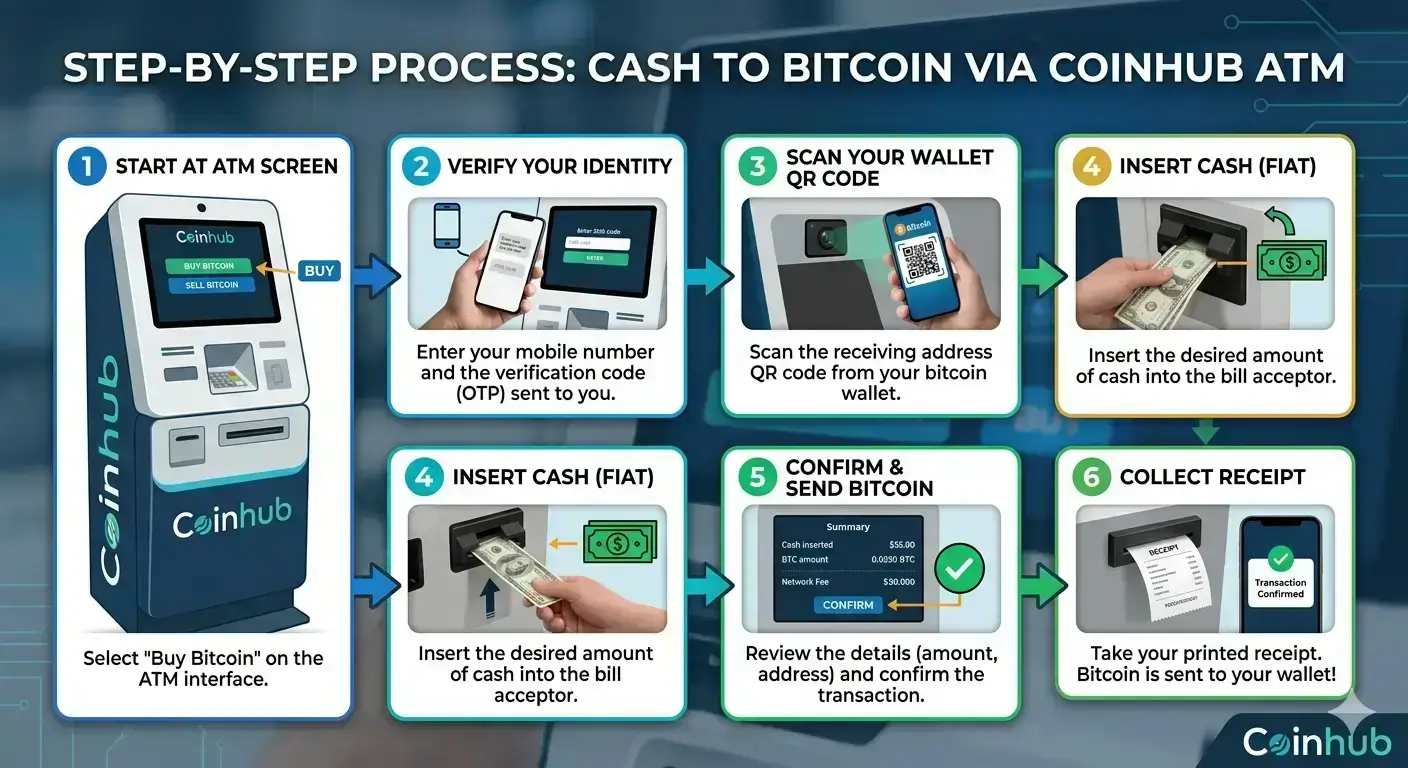
How to use Coinhub ATM securely
- Select ‘Buy Crypto’: Tap the Buy Crypto button on the kiosk touchscreen.
- Verify your phone: Put in your cell number and we’ll text you a 6-digit code. Just enter the code on the screen to finish up.
- Flash the Barcode: Tap into your wallet app, toggle over to your Bitcoin receiving address, and wave the QR right beneath the reader to queue up the transfer.
- Insert Cash: Feed your paper bills into the cash acceptor one by one.
- Confirm and Complete: Review the transaction summary and tap confirm. The network routes the purchased crypto straight to your wallet.
Final Thoughts
For anyone wanting to buy Bitcoin quickly with physical cash while avoiding online banking friction, Coinhub ATMs provide a reliable, regulated gateway.
The system’s hardware and network architecture are fundamentally secure.
Using a crypto ATM is actually pretty smooth and safe, provided you hold your own private keys and don’t pay into random QR codes someone texted you.
Frequently Asked Questions (FAQs)
1. Does Coinhub require a linked bank?
No bank info needed, ever. Just feed ordinary US cash into the terminal, and the kiosk transfers your Bitcoin directly to your private address.
2. When will I actually get my coins?
Pretty fast. The machine sends our Bitcoin right after you hit confirm. Depending on general blockchain traffic, the coins typically pop up on your screen in about 10 to 30 minutes.
3. Do I have to scan my ID to buy Bitcoin?
It depends on how much cash you’re putting in. For smaller runs, your cell number handles the verification. Once you step past $2,000, you have to whip out a driver’s license or passport to clear federal anti-fraud checks.
4. Why the higher price tag on crypto ATMs?
You’re paying for convenience and hardware. Between store floor rent, cash-in-transit security, maintenance calls, and legal compliance, operating costs add up fast. That convenience comes at a cost: expect to pay 7% to 15% on top of typical bank-wire rates.
5. Can I sell crypto and get cash out at a Coinhub kiosk?
Most Coinhub ATMs are one-way machines built exclusively for buying crypto with cash. While select locations feature two-way kiosks that dispense paper bills, they are much less common, so you should always check the machine’s features on the map before making the trip.
6. What should I do if someone asks me to pay a bill using a Coinhub ATM?
Do not feed any cash into the machine. Real companies, utility providers, the IRS, and local law enforcement will never demand payments in Bitcoin. The second a caller insists on staying on the line while you visit a crypto ATM, drop the call. That’s textbook fraud.
What Do You Think?
Have you ever stood in front of one of those crypto machines and bought digital coins with cold hard cash? Does doing it in real life feel better to you, or are online swaps just too easy to beat?
Drop your take or drop a quick story below !
Disclaimer: The information provided in this article is for educational and informational purposes only and does not constitute financial, investment, legal, or tax advice. Cryptocurrency investments and kiosk transactions carry market risks, high volatility, and non-refundable transaction fees. We do not endorse any specific third-party provider or exchange. Always perform your own due diligence, verify ATM fee structures and network fees before confirming transactions, and consult a certified financial advisor before making any financial decisions.